
CulturePortStudent-life companion
A completed MSc dissertation exploring a calm student-life companion for activities, planning and support. CulturePort asks how clearer next steps can help new students and those facing disability-related barriers or social anxiety navigate university life.
- Problem
- Activities, planning and support connect around a manageable next step.
- Role
- I researched and designed the companion for my completed MSc dissertation.
- Evidence
- Exploratory research and group/online questionnaires examined student needs and prototype navigation.
- Outcome
- The submitted work combines a Figma prototype, companion identity and evaluation-led refinements.
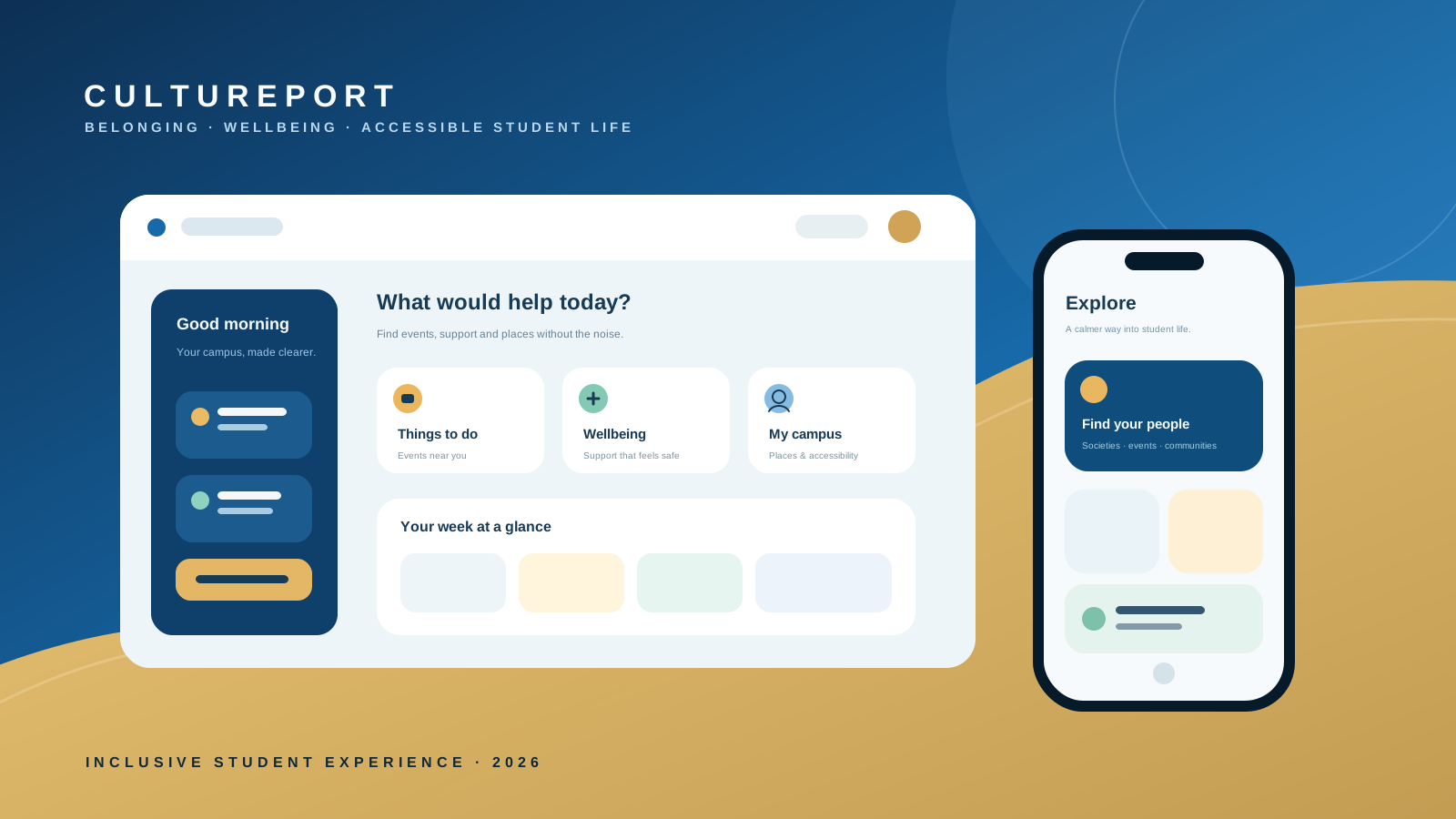
Belonging starts with a clear next step.
How can a student understand what to do next, what will happen and how to return—across activities, planning and support?
CulturePort addresses the effort of navigating university life when activities, deadlines and support feel disconnected. Its audience includes new students and those facing disability-related barriers or social anxiety. The reported exploratory research included 19 pre-survey responses and six interviews. Priorities included tasks and deadlines, simpler steps, saved progress and support access.
The companion connects activity discovery, planning, support and break suggestions. Students should understand the next action, its consequence and the route back: what can I join, how do I begin, where can I get help, and how can I pause? Personalised guidance and gentle rewards support that direction, while Hesti gives the companion a recognisable visual identity.
Evaluation separated positive reactions from task completion. The group questionnaire had six responses per task: three reported finding an activity unaided and two with help. Online, seven responded and five reached Home; one of those five reported completing the activity task. Online completion did not distinguish assistance. These small, differently structured evaluations identified navigation clarity as a priority, without establishing equivalent success rates.
A Double Diamond grounded in everyday decisions.
The project moves from exploring student needs to defining a shared interaction principle, developing the journey and examining what happened during prototype use.
Discover the practical barriers
The exploratory research looked beyond whether students liked the idea of a companion. Tasks and deadlines, simpler steps, saved progress and support access emerged as useful priorities. These gave the design a practical focus: helping someone work through an everyday university decision without needing to understand the whole system at once.
Define a shared navigation principle
The synthesis connects activities, planning and support through three questions: what is the next action, what does it do, and how do I get back? A consistent answer matters when a student is browsing, uncertain or not ready to commit. It gives reassurance a concrete interaction requirement.
Develop the complete journey
The design direction includes the full activity-discovery journey rather than isolated attractive screens. Clear hierarchy and typography help distinguish browsing, choosing and taking action. The Hesti artwork and 3D visual development give the companion an identity, while the interaction remains centred on understandable steps and a calm, low-pressure experience.
Evaluate the journey in context
The Double Diamond connects discovery and definition with prototype development and evaluation. The group questionnaire recorded assistance, while the online questionnaire used a different completion measure. Reading those settings separately exposed navigation issues without reducing the whole experience to a single success rate. Revisions followed the findings, but were not retested.
A visual direction centred on belonging.
The concept visuals express a connected student experience. The dissertation’s visual direction includes Hesti, the companion artwork, and the activity-discovery journey.

A connected experience, shaped around belonging.
Discovery, support and accessibility form one connected direction. The visuals express the project’s focus on clarity, gentle guidance and belonging.
A submitted dissertation, with a clear design lesson.
CulturePort is complete and its MSc dissertation has been submitted. The project brings together a student-life companion concept, a Figma prototype and an exploratory evaluation, with a clear design lesson about understandable next steps.
Interest is different from completion
A positive reaction to a feature does not show that someone can use it unaided. The activity task made the distinction tangible: support for the idea sat alongside difficulty finding and completing the intended route through the prototype.
Keep the evaluation settings distinct
The findings come from small samples and self-reported task outcomes. Group responses distinguished assistance; online responses did not, and some online respondents did not reach Home. Those differences limit comparisons and cannot establish universal accessibility or a deployed student service.
Test the revised journey
A subsequent evaluation would need to revisit the revised activity flow with clear task and assistance measures. Until then, the submitted changes remain informed design responses rather than evidence of improved performance.