
Signal CoreEmergency wearable
A screenless safety concept exploring a deliberate press–open–turn sequence when reaching a phone is difficult. An exploratory study with a physical model examined what people understood, what they trusted and what needed further development.
- Problem
- A screenless backup explores signalling when reaching a phone is difficult.
- Role
- I combined UX research, product design and physical prototyping.
- Evidence
- A survey and model-handling interviews examined comprehension, trust and fit.
- Outcome
- The output combines a rendered interaction, a non-functional model and a development brief.
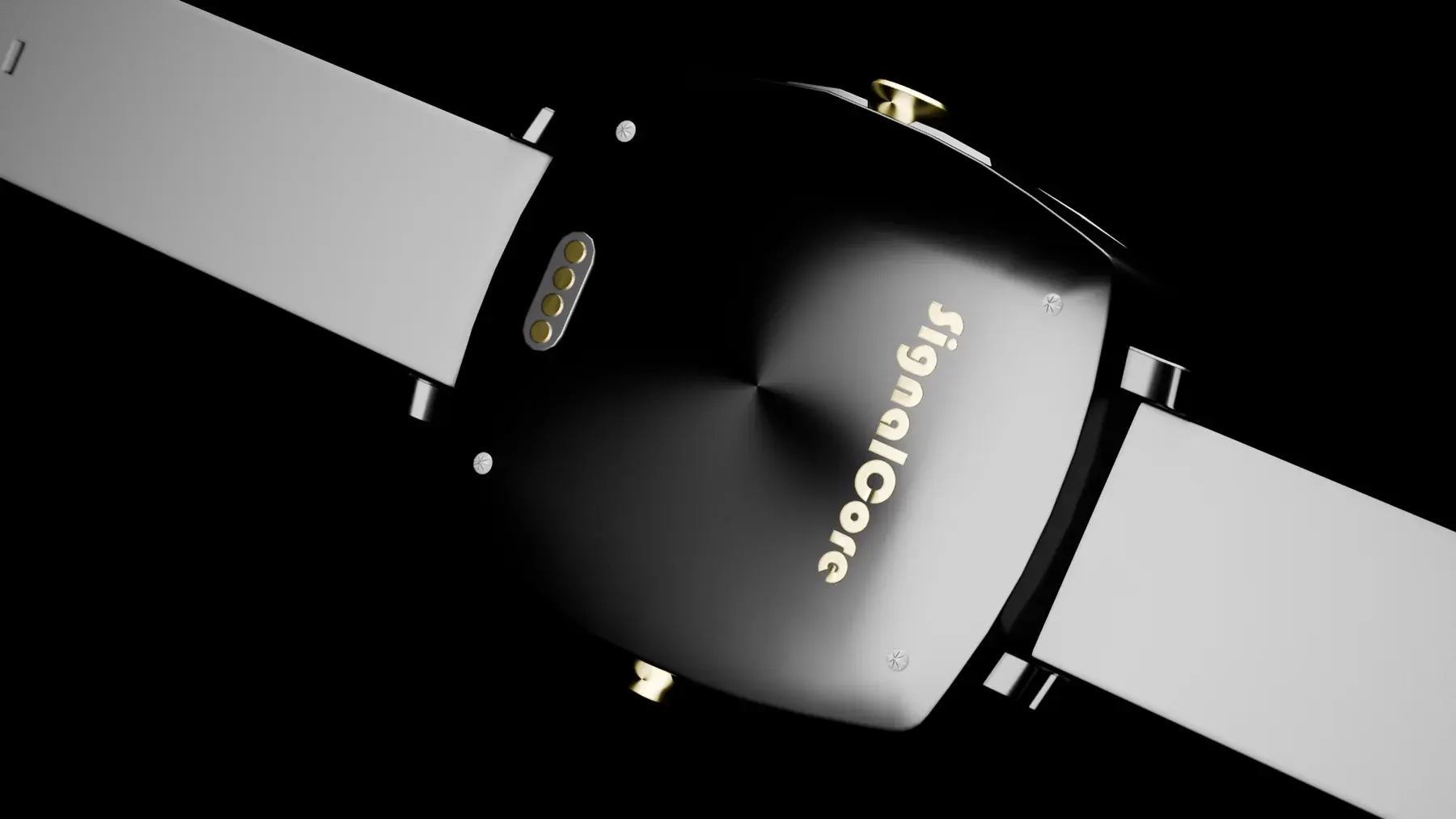
The safety gap behind the object.
What would a useful backup look like when reaching for a phone is difficult, unsafe or simply no longer an option?
Phones offer maps, calls and reassurance, yet can lose signal or battery when needed most. Signal Core explores a backup for solo travel, outdoor activity and unfamiliar places. I examined whether people recognised that gap, understood the concept and would carry it, using a survey and physical-model interviews.
The proposed interaction is PRESS → OPEN → TURN → SIGNAL. Side buttons release a protective lid; turning the dial selects Danger or Medical. LED SOS patterns and sound are intended to attract nearby attention. The deliberate physical sequence avoids screen menus. An earlier forearm design became wrist-worn to address bulk, heat and freedom of movement.
Twenty-two of 23 respondents recognised experiences of uncertainty or risk. Purpose clarity averaged 4.04/5, compared with understanding at 3.61 and usefulness and trust at 3.57. Interviews made those reservations practical: battery life, reliability, clearer controls, cancellation feedback and comfortable fit. The results identify conditions for further development, rather than establishing that the device would be safe to rely on.
From emergency idea to testable decisions.
The design and the research answer different questions: what the object could do, and what people need before they would trust it.
Examine the role of a backup
The concept was designed as a backup to phones and existing support. Research examined whether that role made sense to potential users, who described dead batteries, missing signal and unsafe phone use. The question was how to help without creating a false sense of safety.
Make activation deliberate and legible
Two modes organise the concept around the help being sought. Side buttons, the opening lid and the dial create a physical sequence. The study also exposed unclear D/M markings and questions about cancellation, making tactile cues and confirmation feedback priorities for the next iteration.
Use the model to surface practical concerns
The 3D print gave interviewees something to hold and discuss. It revealed differences in wrist fit, comfort and willingness to wear another device. Belt clips, bag straps and larger or more tactile controls emerged as directions to investigate, rather than established accessibility solutions.
Explain the intended behaviour
The model was built and animated through 3ds Max and Blender. A rendered sequence explains the moving parts, while the physical print makes the form available to inspect. Working electronics, signal performance and emergency response remained outside the prototype, so the film communicates a proposal rather than verified operation.
See how the interaction is intended to work.
The construction renders explain the proposed controls; the physical model shows what could be handled during research. The film demonstrates intended behaviour, without working emergency electronics.
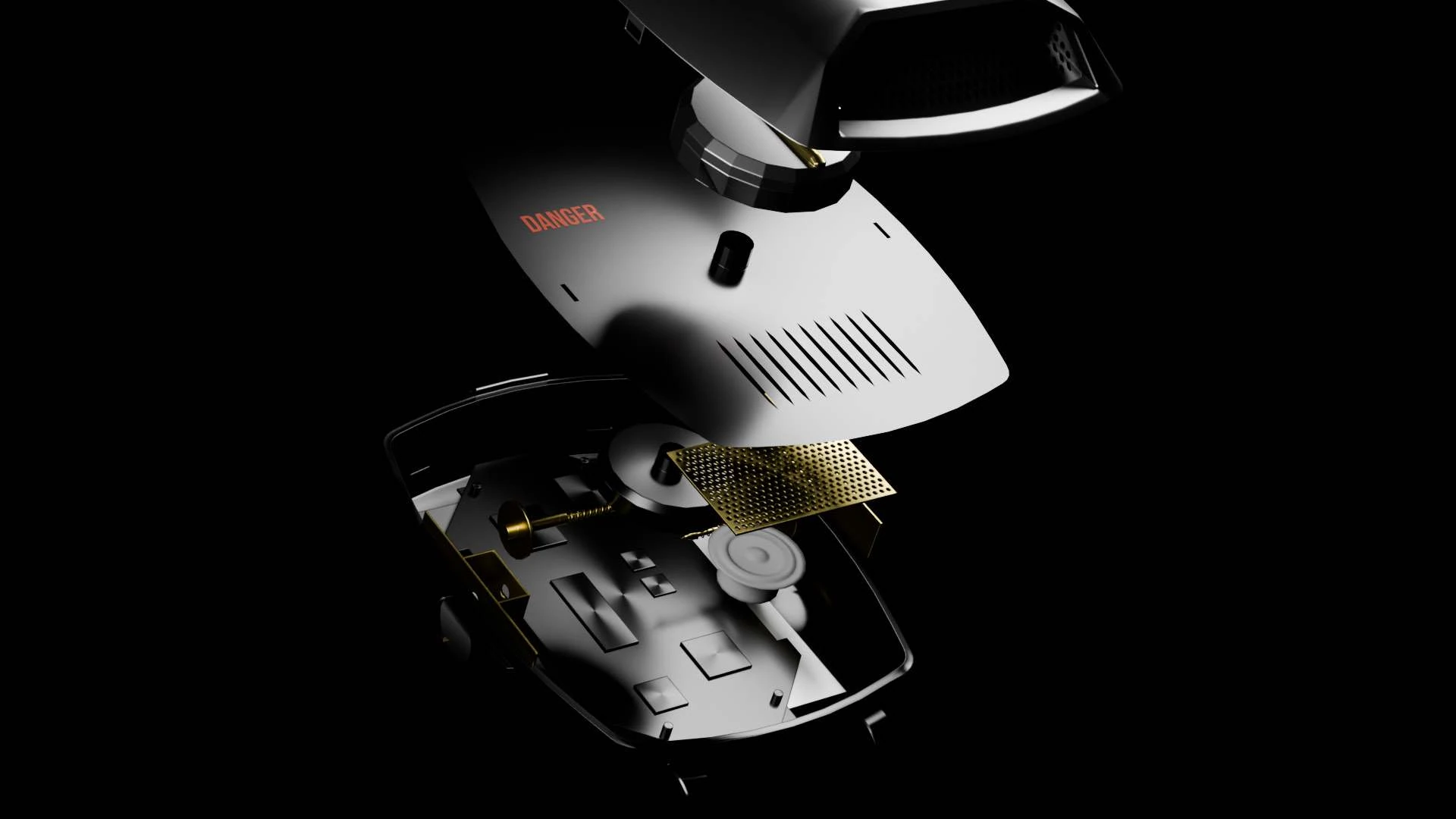
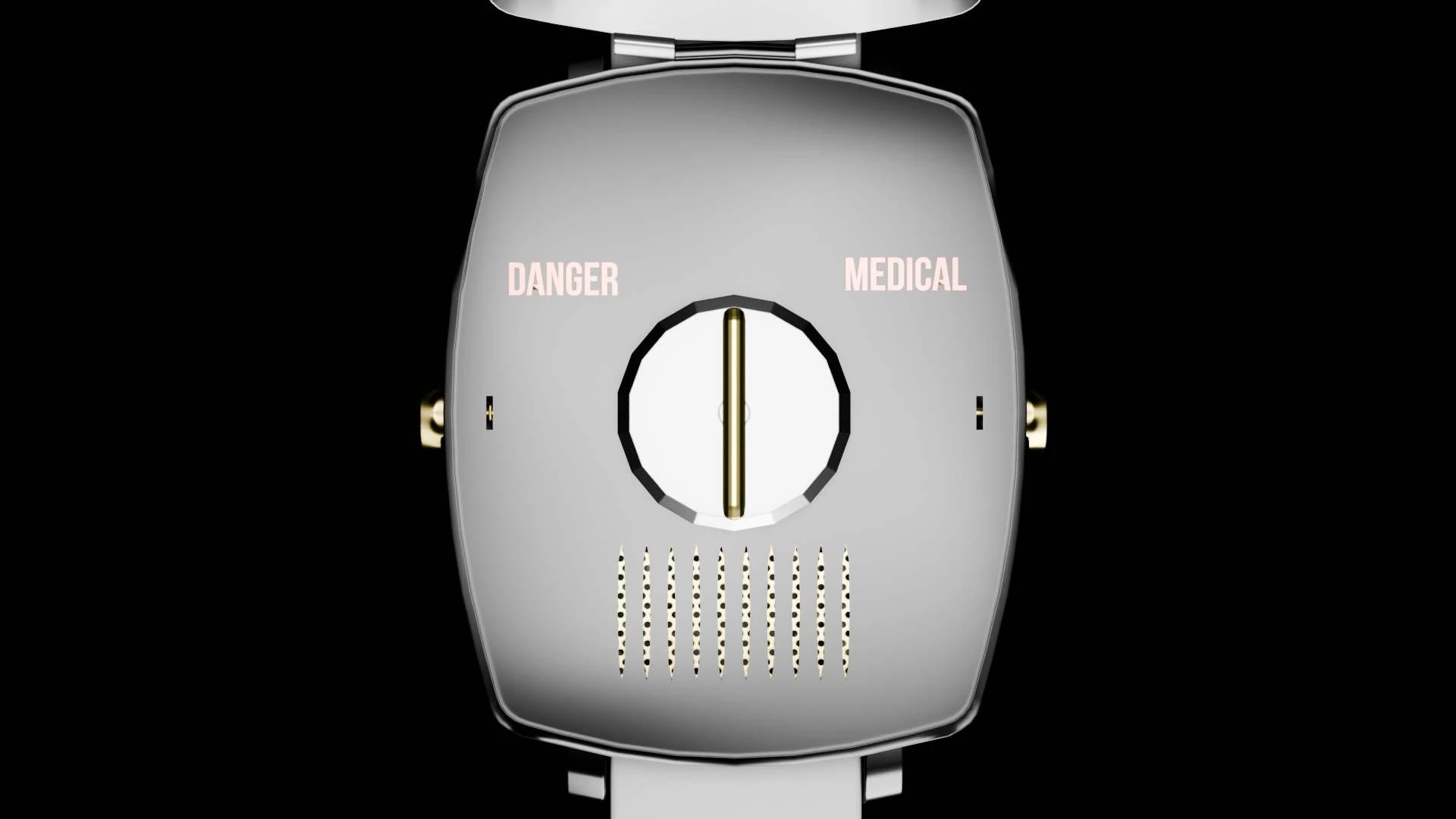
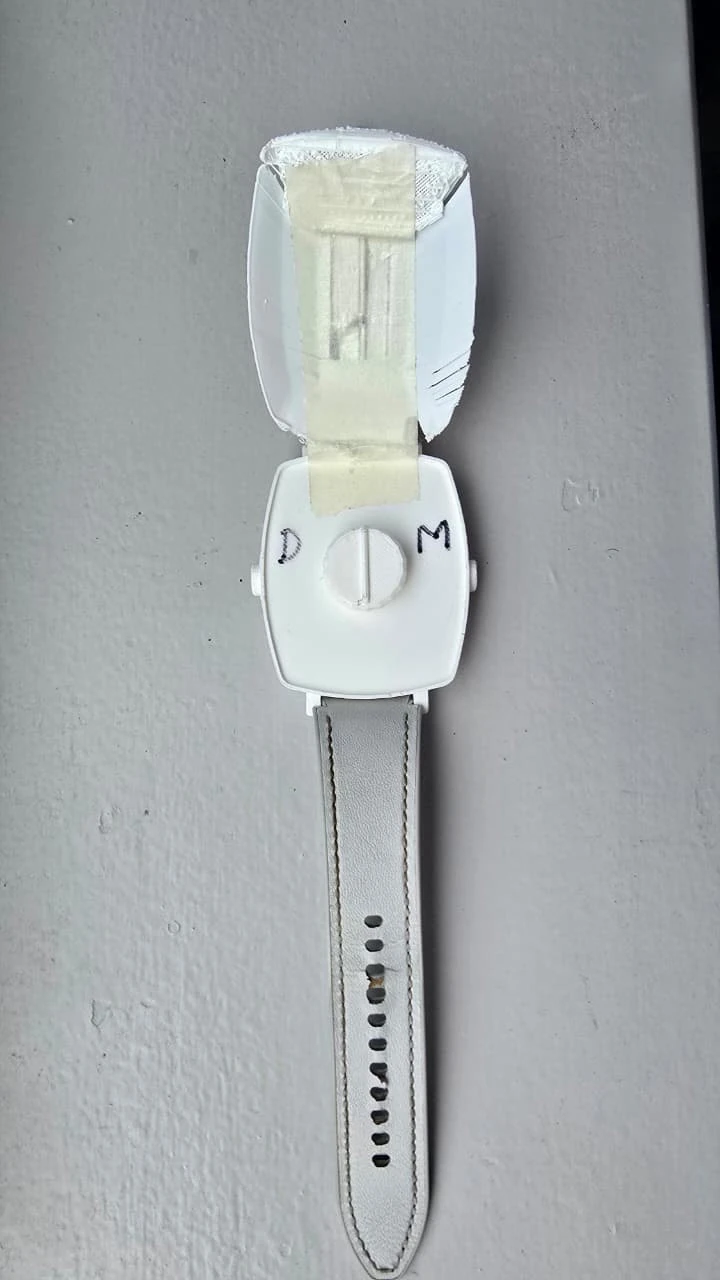
Signal Core prototype film
Follow the side buttons, opening lid and rotating dial, then see the model’s construction. The film communicates intended behaviour rather than a tested emergency system.
A direction worth refining, with trust still to earn.
Signal Core brings together a physical interaction, rendered demonstration and 3D-printed concept. The research makes the next development brief clearer: reliable signalling, understandable controls and a form people would be comfortable carrying.
Clarity comes before confidence
Purpose clarity was rated more highly than understanding and trust. That gap matters: a convincing safety idea still needs controls that make activation, feedback and cancellation understandable when someone is uncertain or under pressure.
What the model could reveal
Handling the print made fit, reach and wearing preferences discussable. The small convenience sample and controlled interviews could reveal concerns about the concept, but could not establish real-world safety, reliable electronics or an effective emergency response.
The next useful test
A working prototype would allow targeted testing of battery behaviour, signalling, unaided activation and cancellation. Controlled outdoor use and alternative carrying options would help investigate the practical concerns raised in the study before any reliance on the device.
The complete exploratory study: recruitment, results, interview themes, design implications and limitations. Private participant records are excluded.
The forearm-to-wrist design change, moving parts, modelling process, rendered film and physical concept.