
PARMMuseum experience
Short stories around real exhibits. PARM pairs a phone prototype with a future AR-glasses concept for Portsmouth Museum’s Sherlock Holmes Gallery, exploring a simple start–scan–story loop that keeps attention on the objects.
- Problem
- Visitors needed an easy way into exhibit stories while keeping the gallery central.
- Role
- I worked with Roderick Asante Mireku in a two-person UX design team.
- Evidence
- Surveys, interviews and observation informed a brief simulated evaluation with two adults.
- Outcome
- The academic project pairs a phone prototype with a future glasses concept for a hypothetical client.
More story. Less effort.
How can a digital layer make an exhibit more engaging while letting visitors keep looking at the object in front of them?
Our university assignment used Portsmouth Museums as a hypothetical client, with the Sherlock Holmes Gallery as the pilot. Research combined 19 adult survey responses, three interviews, observation and secondary sources. Visitors skimmed case labels; casual visitors wanted a simple story, enthusiasts wanted depth, and families needed a shared focus.
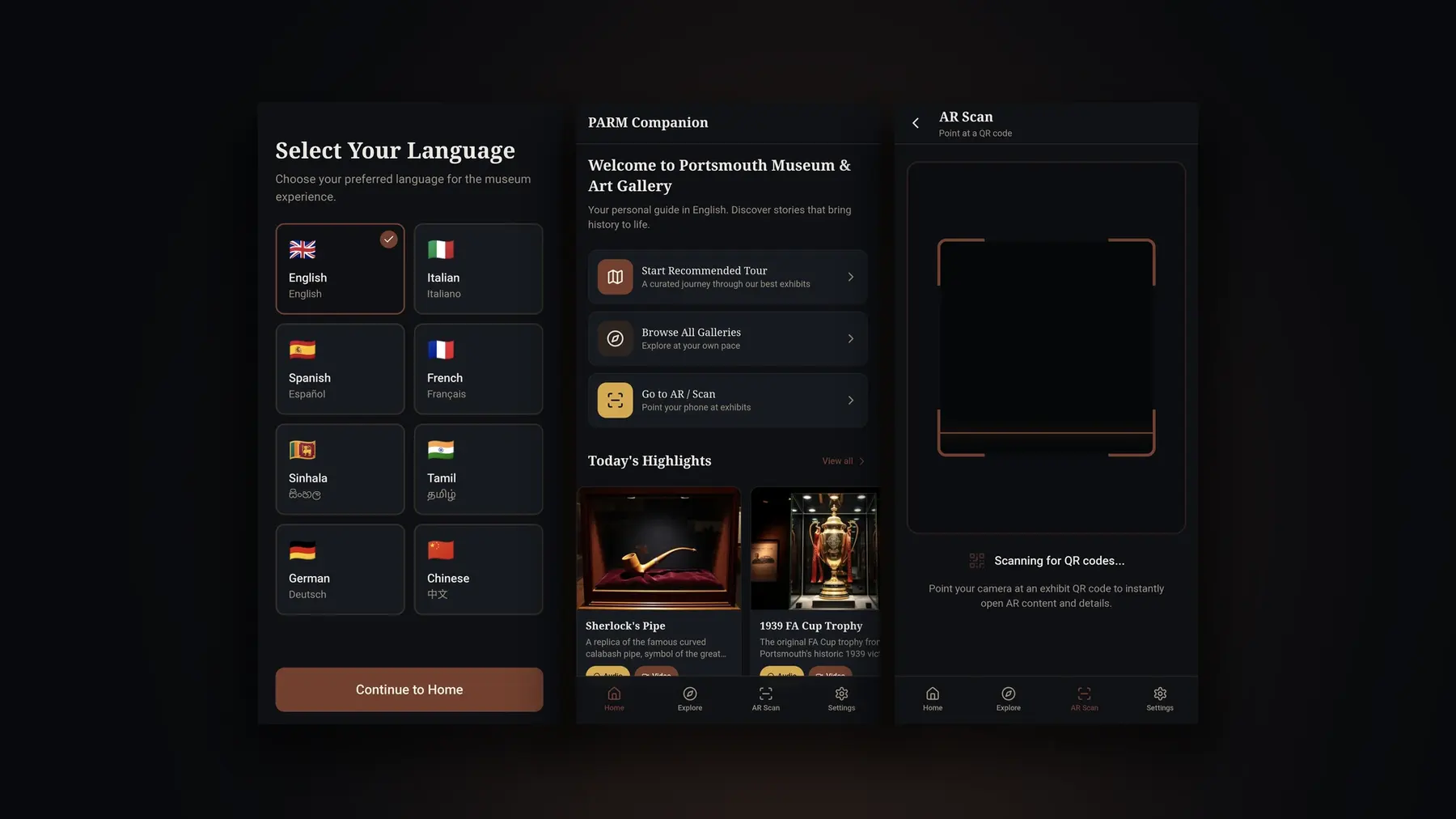
Two routes share one loop: choose a language, approach or scan an exhibit, listen and watch, then move on. PARM Companion uses phone QR scanning or manual selection. Future PARM Glasses propose proximity-triggered audio and light overlays. Short stories keep attention on artefacts; deeper information and game-like activities were reserved for later iterations.
Two adults tried the phone prototype with a printed QR code and watched the glasses video outside the gallery. They understood the start–scan–story loop and found the audio/video engaging. Feedback identified clearer scanning/found states, playback controls, duration information and consistent Back/Home navigation as refinements, rather than establishing improved engagement across visitors.
Designing around attention, not another screen.
The research led to a restrained first version: approach or scan, experience a short story, and keep exploring the gallery.
Follow the visitors before adding technology
Interviews gave us individual motivations; observation showed how people actually moved, skimmed and shared the space. We synthesised the findings through affinity mapping, personas and journey work. The brief became a story and attention problem, rather than a reason to redesign the whole museum.
Keep the exhibit first
We chose short audio and visual moments linked to particular objects. A calm interface, few choices and a repeatable loop let the digital layer support looking and listening. We reserved deeper stories for later versions, so the first prototype could focus on starting, triggering and understanding one story.
Connect two access routes
Phone scanning makes the concept tangible with equipment visitors already carry. The glasses video explores a more hands-free future, using proximity triggers and audio through the frame. The two routes share a visual and interaction language, while their different technical maturity stays explicit.
Turn feedback into the next brief
The evaluation checked starting, scanning and understanding the glasses concept. Requests for scanning feedback, playback controls and consistent Back/Home navigation gave the next iteration specific priorities. An in-gallery study would need to examine interruptions, varying technology confidence and the practical demands of museum use.
The phone prototype and the future glasses direction.
The phone screens and earlier scan wireframe show how visitors enter the story. The films distinguish the companion prototype, proposed glasses form and an AI-generated future-use scenario.
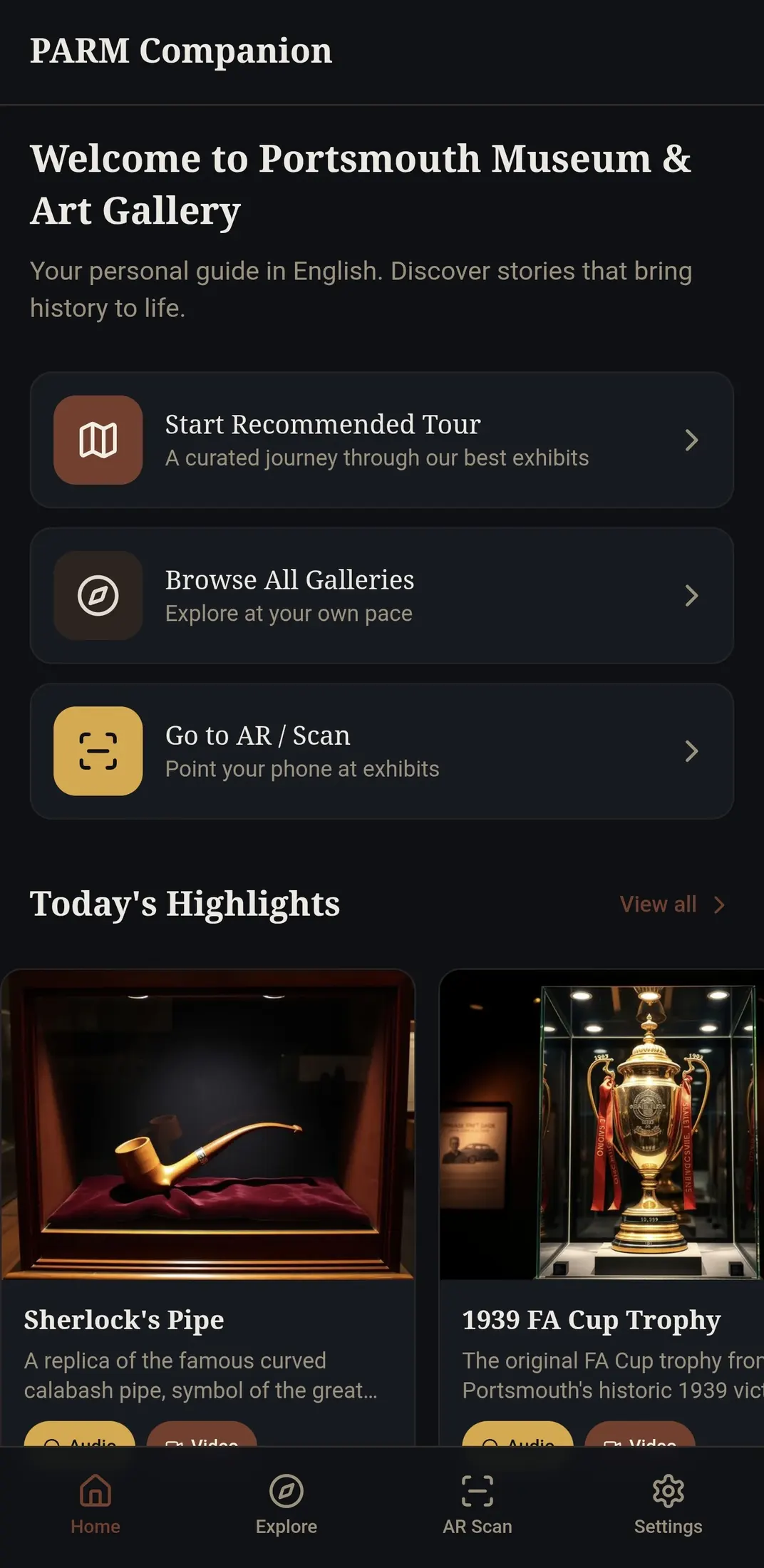
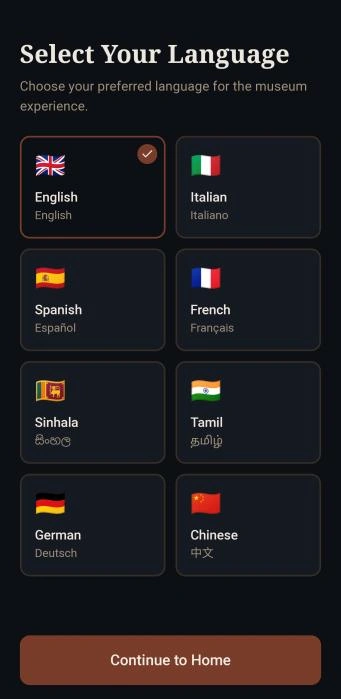
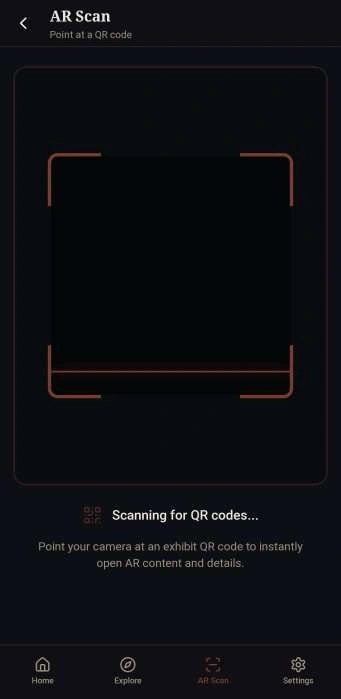
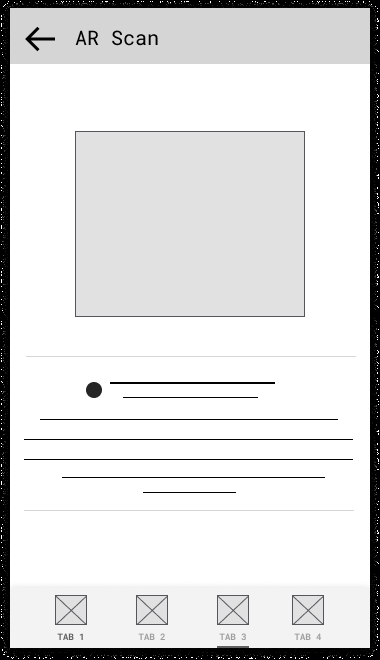
PARM Companion
See language selection, the exhibit trigger and a short AR-style story, with the physical gallery remaining the main focus.
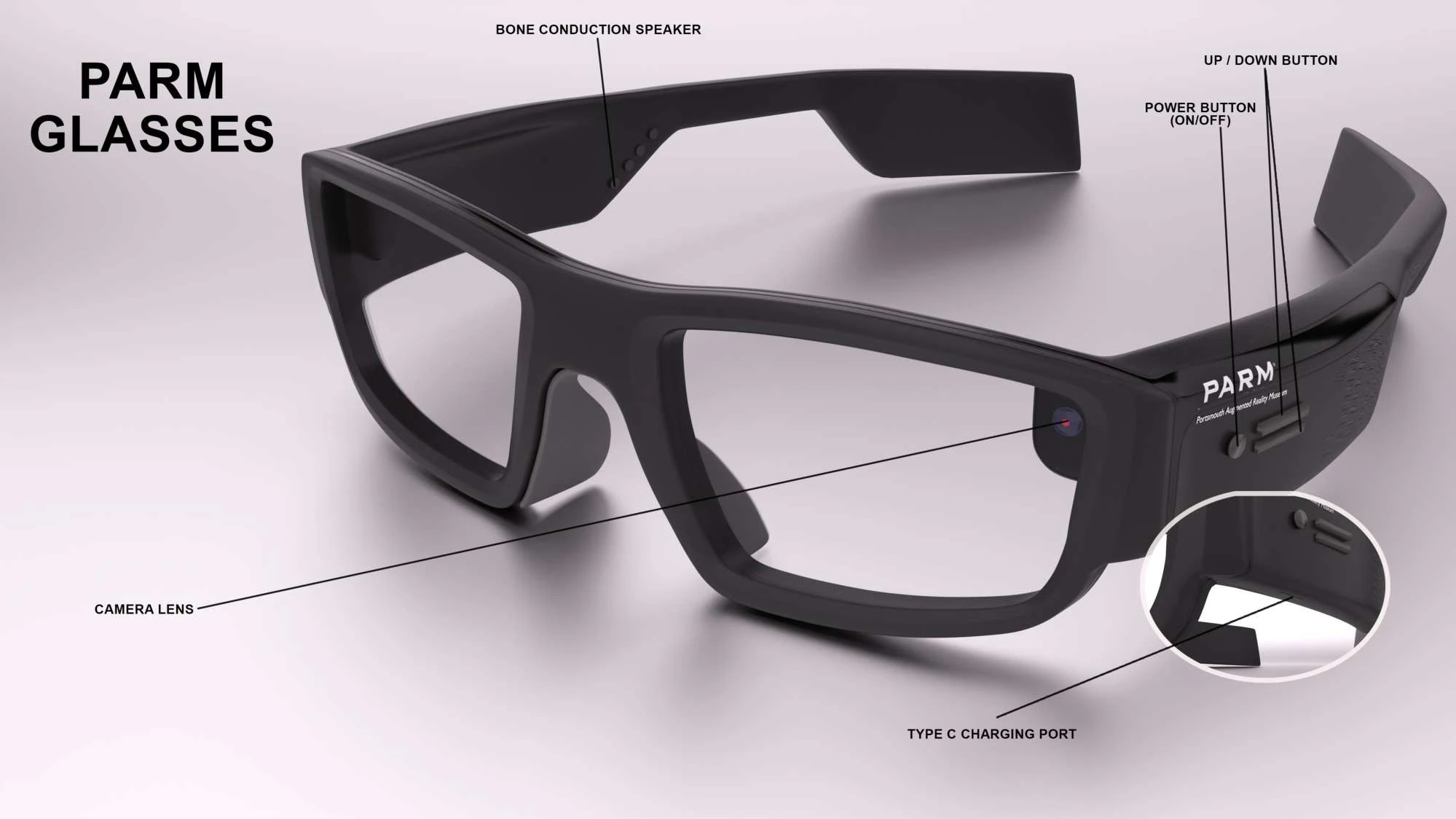
PARM Glasses · 3D concept
A visual study of the lightweight glasses direction. It presents the form, not a functioning museum device.
PARM Glasses · Concept film
A conceptual demonstration of proximity-triggered stories and audio. The intended glasses behaviour still requires a working prototype and in-gallery testing.
A clear visitor loop, ready for deeper evaluation.
PARM produced research synthesis, interaction flows, phone prototypes and visual demonstrations of a connected museum experience. The initial evaluation made the next design decisions specific, while leaving the proposed glasses system and in-gallery experience open for further work.
Read the test at its actual scale
Two adult volunteers evaluated the phone and glasses video in a simulated setting. Their feedback supports iteration on clarity, while the proposed proximity detection and glasses hardware still require working prototypes. It does not establish a successful installation or wider visitor impact.
Prepare for the real gallery
Further work needs in-gallery testing, reliable triggers, staff support and device maintenance. Captions and audio descriptions remain priorities. Those operational details matter if a short digital story is to fit naturally around real objects and a shared visit.
Research, visitor needs, interaction decisions, prototype evaluation and the practical limits of the proposed system. Private participant records are excluded.
A concise presentation of the opportunity, visitor loop, prototype findings and next steps.