
Open Mind EraUtopia · 2075
What if belonging meant being emotionally visible? Open Mind Era imagines 2075 through a coming-of-age ritual, a public Mood Beacon and a community responding to shared feeling, opening a question about the privacy that care assumes.
- Problem
- The scenario asks what a society gains and gives up when emotion becomes visible.
- Role
- I contributed futures and visual design within a group project.
- Evidence
- Cultura and The Thing from the Future connected social rules to a speculative object.
- Outcome
- Films, a prototype and a pictorial communicate the fictional society of 2075.
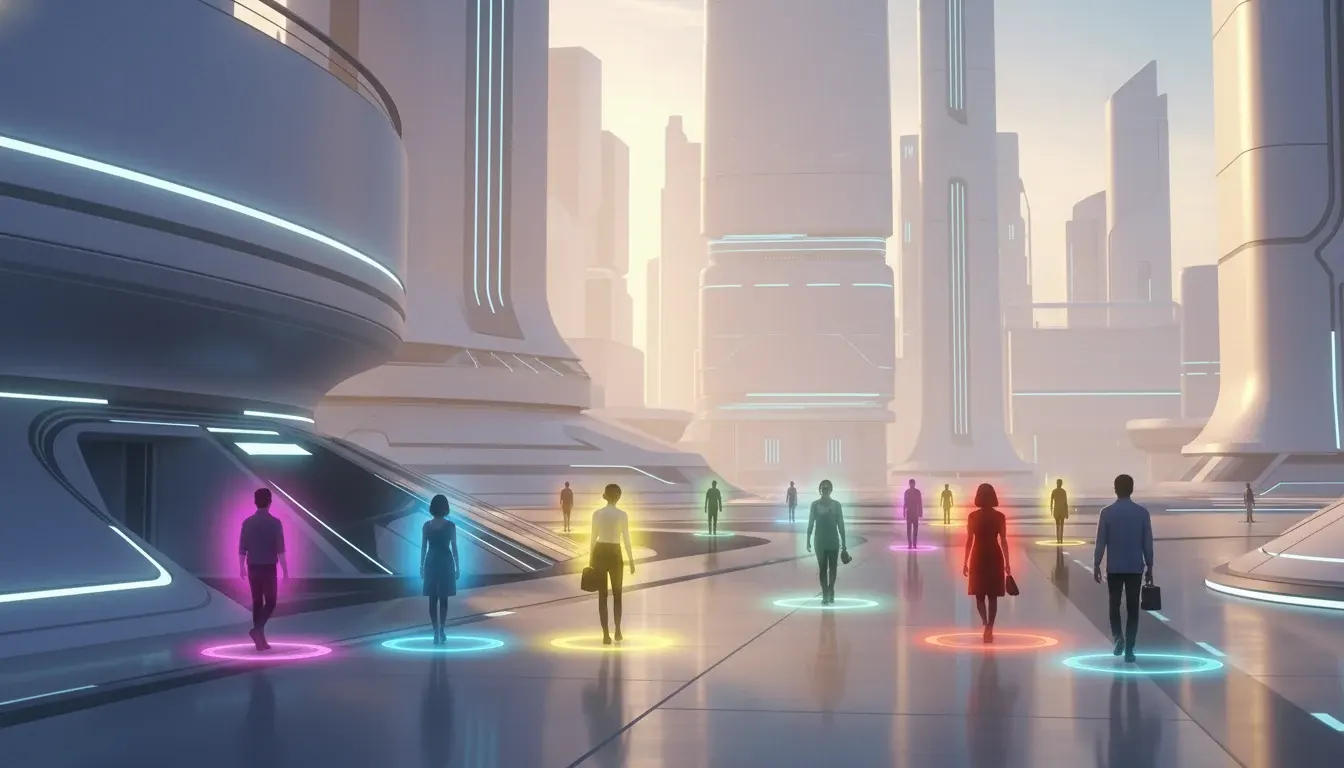
A world built on visible feeling.
What changes when a community can see how everyone feels—and builds its culture around that visibility?
Our group asked which kind of privacy would most affect collective wellbeing if it disappeared. We chose emotional privacy: the ability to keep a feeling to yourself. The task was to make a fictional 2075 coherent across technology, relationships, public services and everyday rituals, rather than designing a near-term app.
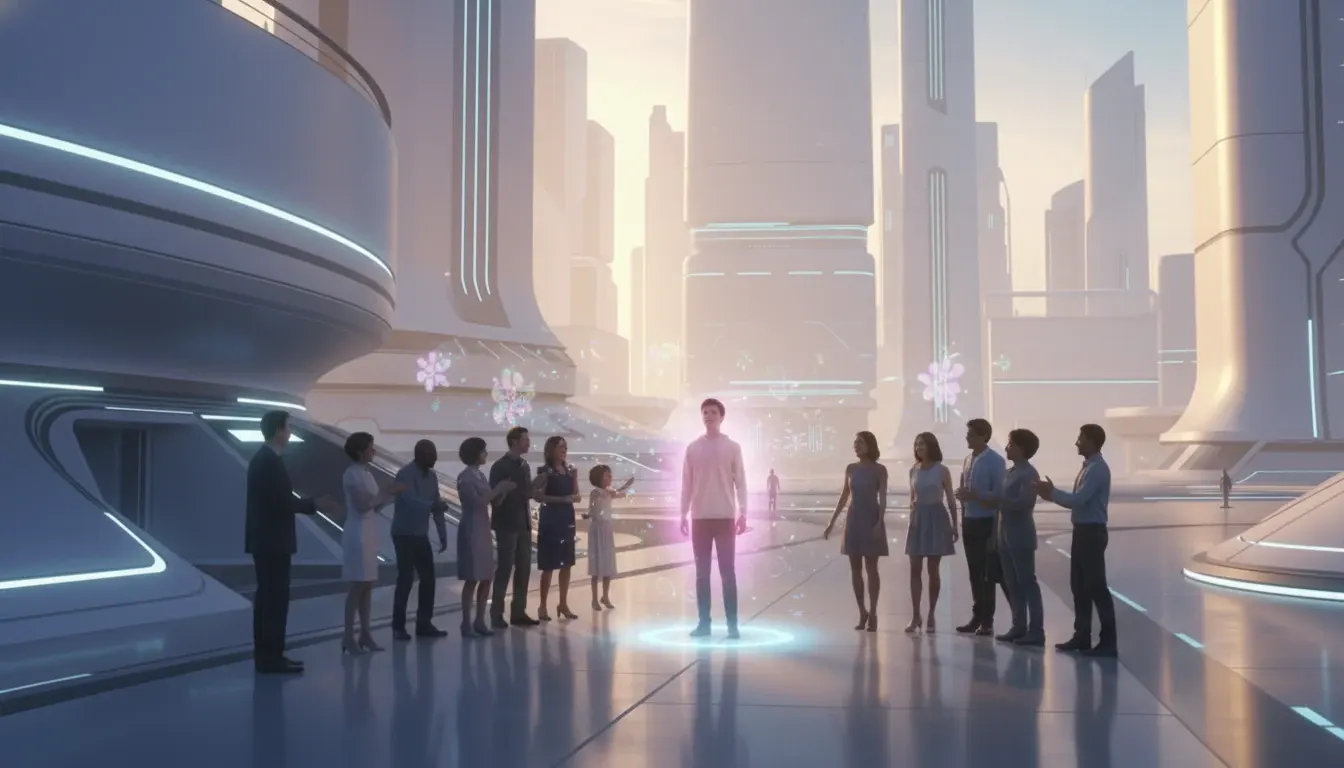
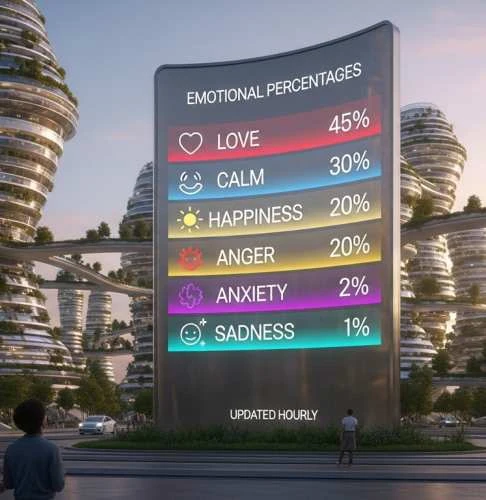
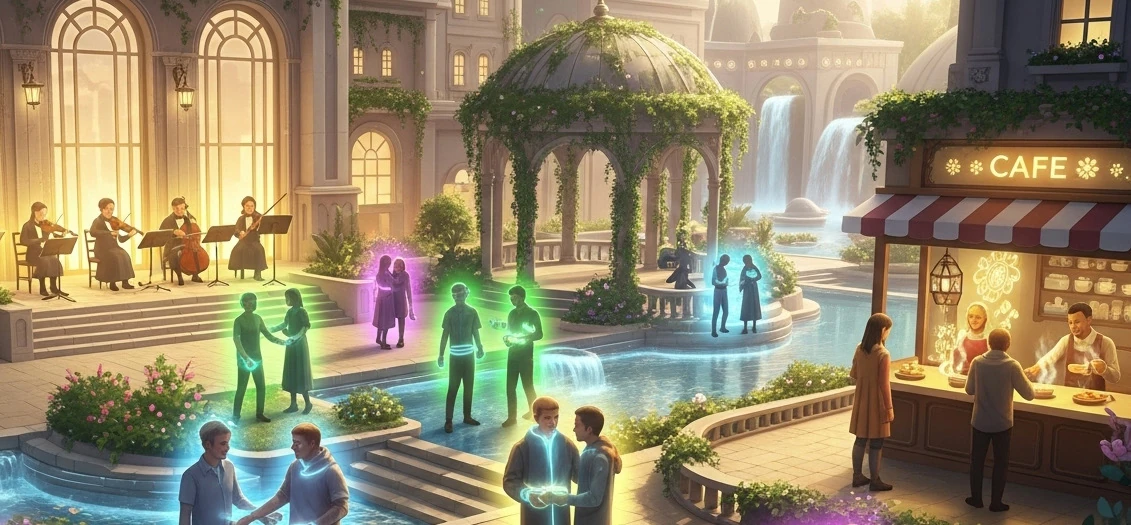
The fictional MindChip makes adult emotions visible as coloured auras. First Light marks activation at eighteen, and six colours give the world a shared visual language. A public Mood Beacon depicts the town’s emotional climate. Private AI support, calm pods and meditation gardens turn that information into acts of care within the imagined society.
The story speaks from the perspective of people who see visibility as belonging. Its promise is immediate recognition: anxiety or sadness might prompt support. Its unresolved assumption is that public emotion is something everyone should accept. That raises questions about who interprets a feeling, whether care remains voluntary and what room is left to be unreadable.
From a privacy question to a lived-in future.
The method connects a social premise to rituals, artefacts and public systems, then uses narrative to make their consequences discussable.
Define the culture before the object
Brainstorming focused the brief on emotional privacy. Cultura cards helped us establish values, rituals, everyday rules and community behaviour. Those choices gave the world a social foundation, so the technology could be understood through what people do rather than through futuristic styling alone.
Give the premise a tangible anchor
The Thing from the Future worksheet helped us imagine an object suited to that world. MindChip became the speculative anchor: its aura creates a shared language for feeling. The prototype and film make the premise visible without claiming that this fictional biotechnology can actually read emotions.
Show how a system becomes everyday life
The First Light ceremony turns activation into a cultural milestone. The Mood Beacon moves the story from the individual to the neighbourhood, depicting a shared emotional climate. Small responses, from comfort drinks to quiet spaces, make the collective-care idea easier to picture as an everyday routine.
Leave the central question open
The project presents a desirable account of shared care while keeping its dependence on visibility available for critique. It becomes the starting point for Hallowed Mind Era, where the same assumptions drift toward surveillance. Reading the two together reveals how a system’s meaning can change over time.
Meet the society, then its speculative artefact.
The ritual, fictional Mood Beacon and community scenes make the world’s rules tangible. The films present the imagined society and its speculative artefact, rather than deployed sensing or clinical technology.
Open Mind Era · Future film
An introduction to the society, its emotional language and the rituals that make visible feeling part of everyday life.
Open Mind Era · Prototype
The physical and visual prototype makes the fictional premise tangible and gives the story an object readers can understand.
A coherent utopia with a question at its centre.
Open Mind Era gives emotional transparency a social world: rituals, public displays, shared spaces and expectations of care. The films, speculative prototype and pictorial make those relationships visible, with Hallowed Mind Era continuing the same premise fifty years later.
Design the rule as well as the object
MindChip is the anchor, but First Light makes its use normal and the Mood Beacon gives it a public role. Connecting object, ritual and institution made the privacy question readable through everyday life, rather than relying on futuristic product styling.
Leave room to question the promise
The story’s appeal depends on feelings being available to others. That creates questions about interpretation and the freedom to remain unreadable. This group-authored design fiction offers a setting for discussion, rather than evidence of functioning emotional sensing, a health intervention or a prediction of 2075.
The full fictional world: MindChip, aura colours, First Light, community responses and the group’s design tools.